In this guide
Choosing a wig comes down to six decisions: how you'll wear it, the hair type, the cap construction, the size, the density and length, and the color. Get those right and the wig looks natural and feels comfortable. Get one wrong — usually the size or the cap — and even an expensive wig ends up in a drawer. This guide walks through each decision in the order that makes buying easiest.
Quick checklist before you buy
- Wear: every day, occasionally, or for medical hair loss?
- Hair type: synthetic, heat-friendly synthetic, or human hair?
- Cap: wefted, lace front, monofilament or full lace?
- Size: head circumference, front to nape, and ear to ear
- Density and length: how full, and how long?
- Color: a match for your natural hair, or a deliberate change?
Start with how you'll wear it
A wig you wear every day has to be comfortable for hours and easy to keep looking good, so breathability and low upkeep matter more than maximum styling range. For occasional wear — events, a change of look — you can put style first and accept a little more maintenance.
If you're shopping because of medical hair loss, comfort on a sensitive scalp comes first. It's also worth asking your insurer whether they cover a wig, which is often billed as a "cranial prosthesis" and may need a doctor's prescription — the American Cancer Society's wig guide covers this in more detail.
Not everyone needs a full wig. If you're covering thinning at the crown or along your part rather than full hair loss, a topper or hairpiece that clips into your own hair can look more natural and usually costs less.
Human hair vs. synthetic
| Synthetic | Heat-friendly synthetic | Human hair | |
|---|---|---|---|
| Styling | Holds its factory style; little restyling | Takes low heat from styling tools | Can be heat-styled, cut and colored like your own hair |
| Upkeep | Low — the style returns after washing | Low to medium | Higher — needs restyling after washing |
| Price | Lowest | Low to medium | Highest |
| Lifespan | Shorter | Shorter | Often the longest, with good care |
| Best for | A first wig, low maintenance | Some styling on a budget | Daily wear and versatile styling |
Synthetic wigs are the easiest place to start: they cost less, keep their style out of the box and need less maintenance. The trade-off is heat. Standard synthetic fiber can melt or frizz permanently near a curling iron or hair dryer, so only use heat on fiber labeled heat-friendly, and only at the temperature the label allows.
Human hair wigs cost more and take more work, but they can be colored, cut and heat-styled like natural hair, and a well-cared-for human hair wig often outlasts a synthetic one. If you'll wear the wig daily and want to change your style, human hair is usually worth the extra cost. If you want a set style with minimal effort, synthetic is the better fit.
Wig cap construction
The cap is the base the hair is attached to. It decides how natural the hairline and part look, and how comfortable the wig feels on your head.
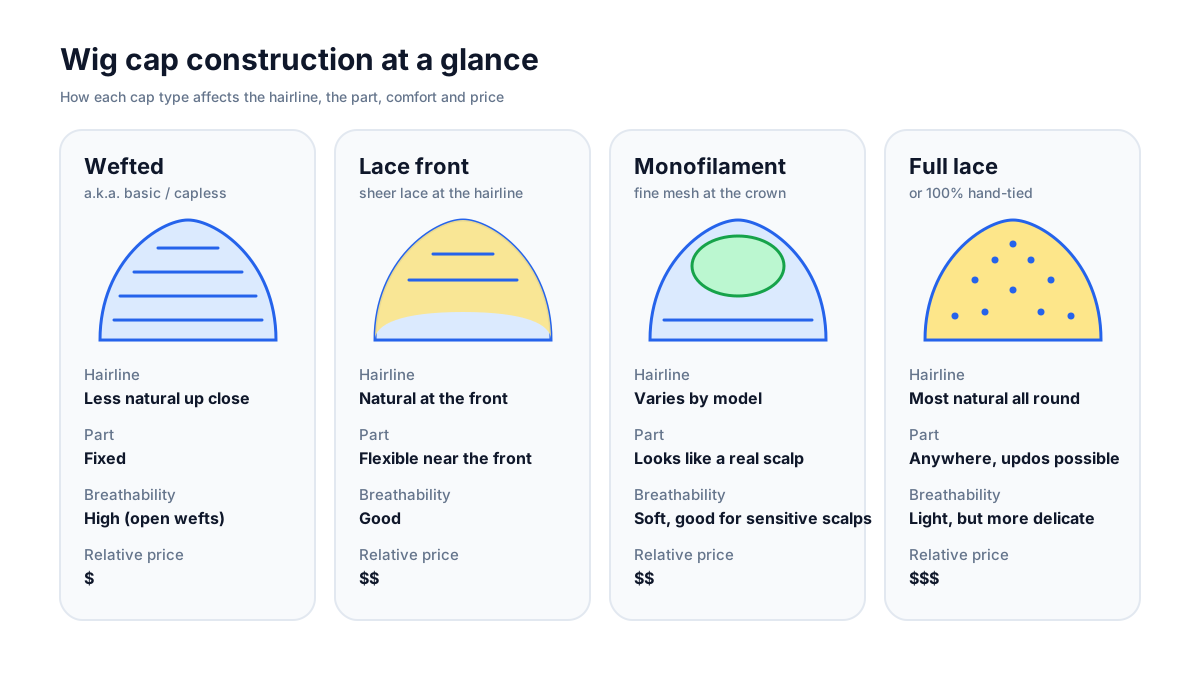
- Wefted (basic) caps have hair sewn onto rows of fabric strips. They're usually the least expensive and the most breathable, but the hairline and part look less natural up close.
- Lace front caps add a sheer lace panel along the front hairline, so the hair appears to grow from your scalp at the forehead. It's the most popular upgrade for a natural-looking hairline.
- Monofilament caps use a fine, soft mesh at the crown or part, with each hair tied in individually, so the part looks like real scalp and can be moved. They're often recommended for sensitive scalps.
- Full lace or 100% hand-tied caps have every hair tied by hand across the whole cap. They look the most natural from every angle and allow updos, but they cost the most and the lace is more delicate.
For a first wig, a lace front or a monofilament top is a sensible middle ground: noticeably more natural than a basic cap, without the price and fragility of full lace.
Getting the size and fit right
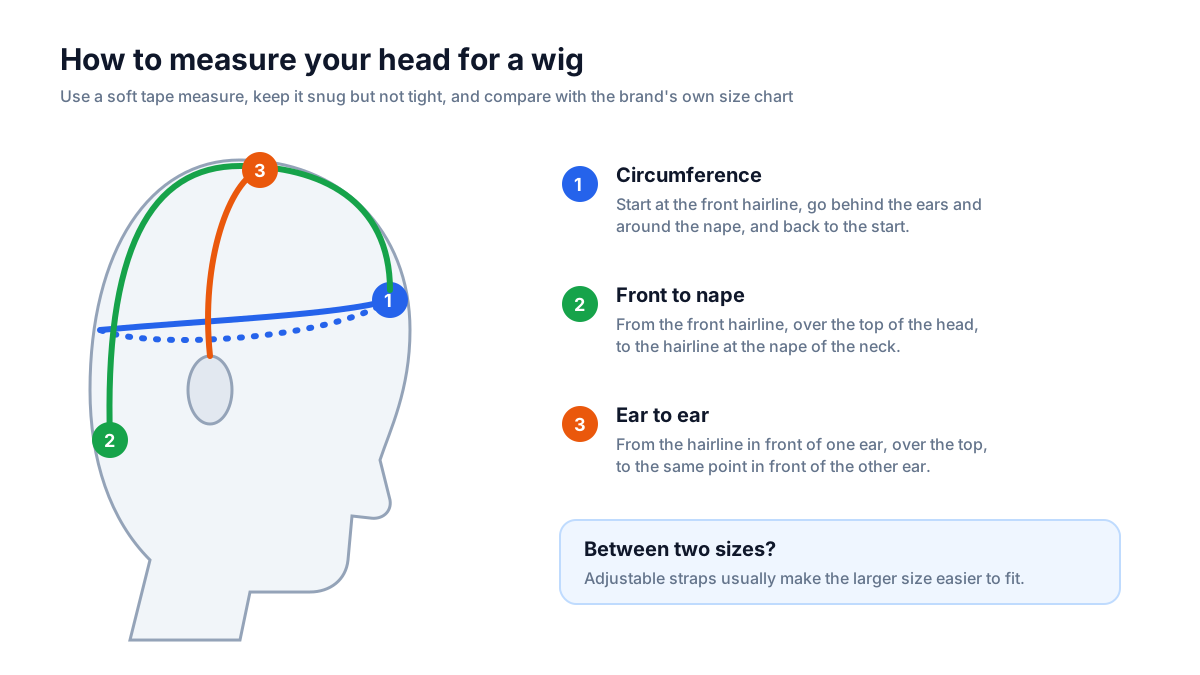
Most wigs come in petite, average and large cap sizes, and a cap that doesn't fit is uncomfortable and can slip. Measure with a soft tape measure, snug but not tight: around your head along the hairline, from the front hairline over the top to the nape, and from in front of one ear over the top to the other.
Compare your numbers with the brand's own size chart, because sizes aren't standardized between brands. If your measurements don't match one size exactly, the American Cancer Society suggests choosing the size closest to your largest measurement, then fine-tuning the fit with the adjustable tabs or straps inside the cap.
If you're measuring before medical hair loss, measure with your hair wet or slicked flat and choose an adjustable cap — your head can measure smaller once your hair is gone.
Length, density and texture
Density is how much hair is on the cap. Brands describe it differently — as light, medium and heavy, or as percentages — so compare options within one brand's scale. Medium density usually looks the most natural for everyday wear. Very high density looks full and glamorous, but it can read as a wig and feels heavier and warmer.
Length changes both the look and the upkeep. Longer wigs tangle more — synthetic fiber especially, at the nape where it rubs against collars — so a shoulder-length or shorter style is easier to live with for a first wig. Texture works the same way: a texture close to your natural hair, or to how you usually style it, makes the wig look like you rather than a costume.
Choosing a color
Matching your natural color gives the most natural result. Look at color swatches in daylight rather than indoor lighting, and if you still have your own hair, compare against a lock cut from the front. Rooted colors — slightly darker at the roots — often look more realistic than a single flat shade. If you want a change, staying within a couple of shades of your natural color is the safest choice for a first wig.
Where to spend and where to save
- Spend on the cap if you'll wear the wig daily — a lace front or monofilament top makes the biggest visible difference.
- Spend on human hair only if you'll actually heat-style or color it.
- Save with a synthetic wig in a style you'd wear as-is, especially for a first wig or occasional wear.
- Budget for the basics: a wig cap or liner, a wig stand, and shampoo and conditioner made for your wig's fiber.
Wig care basics
Use products made for wigs — regular shampoo can damage synthetic fiber — and wash in cool water by soaking and gently dipping rather than rubbing. Let the wig air-dry on a stand instead of wringing it out, store it on a stand or in its net between wears, and keep heat tools away from synthetic hair unless it's labeled heat-friendly. How often to wash depends on how often you wear it; follow the maker's care instructions.
Common first-wig mistakes
- Guessing the size instead of measuring.
- Picking the longest, fullest style online, which often looks less natural in person.
- Using heat tools on synthetic hair that isn't heat-friendly.
- Skipping a wig cap, which helps the wig stay put and protects your own hair.
- Wearing a new wig for the first time on an important day — practice putting it on a few times first.
Shopping at BestWigOutlet
BestWigOutlet sells wigs, hairpieces and hair extensions, so you can compare cap types, hair types and sizes in one place. Before you order, check each product page for the cap construction, cap size and care instructions, and see the BestWigOutlet coupons page for any current discount.
Weighing up glueless or lace front styles? Our Ashimary Hair guide explains lace sizes such as 13x6 and 360, and HD vs. transparent lace.
Frequently asked questions
How do I know what size wig to buy?
Measure your head circumference, front to nape and ear to ear with a soft tape measure, then compare with the brand's size chart. Most wigs come in petite, average and large, with adjustable tabs inside the cap. If you fall between sizes, choose the size closest to your largest measurement.
Is a human hair or synthetic wig better for beginners?
For most first-time buyers, synthetic is easier: it costs less, holds its style and needs less maintenance. Choose human hair if you'll wear the wig daily and want to heat-style or color it.
What's the difference between a lace front and a full lace wig?
A lace front has sheer lace only along the front hairline, so the front looks natural. A full lace wig has lace across the whole cap, so you can part the hair anywhere and wear it up, but it costs more and is more delicate.
What wig density looks most natural?
Medium density usually looks the most natural for everyday wear. Heavier density looks fuller but can look less realistic and feel warmer. Density scales vary by brand, so compare options within the same brand.
How long does a wig last?
It depends on the hair type, how often you wear it and how you care for it. A well-cared-for human hair wig often lasts longer than a synthetic one, and following the maker's washing and storage instructions extends the life of either.

Sources
How we research this guide
This guide is based on manufacturer specifications, official product pages, warranty and return policies, and public sources listed above. We compare features and prices to help you choose. We have not personally tested these products unless a guide says so. Prices and offers can change, so please check the store before buying.
BetterBuyingGuides may earn a commission when you buy through links on this page, at no extra cost to you. Affiliate disclosure